



We have been contacted by many other groups from across the country, who are campaigning against unwanted LTNs, asking us how we succeeded. Here is an outline that we hope is useful. But the real answer is, a lot of hard work and an honest politician!
NOTICE IS HEREBY GIVEN that the London Borough of Croydon on the 25 March 2024 made the above-mentioned Orders under Sections 6 and 124 of Part IV of Schedule 9 of the Road Traffic Regulation Act 1984, as amended, and all other enabling powers.
Open Our Roads (OOR) welcomes today’s landmark High Court judgment in Lawrence v London Borough of Croydon, which has quashed all six Low Traffic Neighbourhood (LTN) Traffic Orders made permanent in March 2024.
The 6 month statutory consultation period which Croydon Council have committed to considering objections within is open.
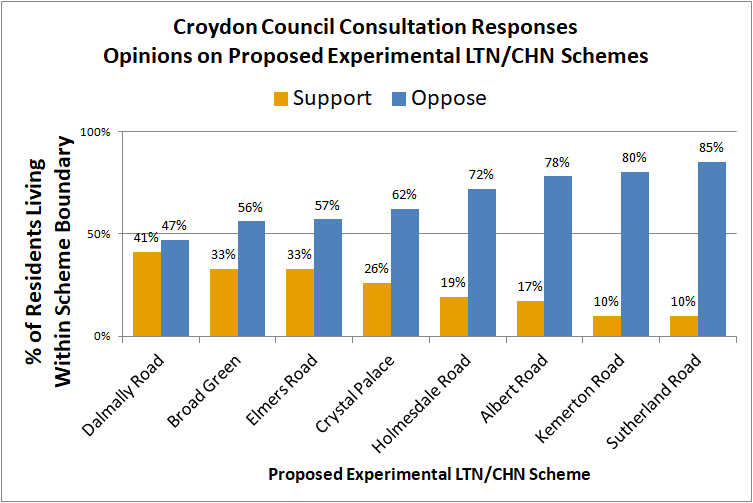
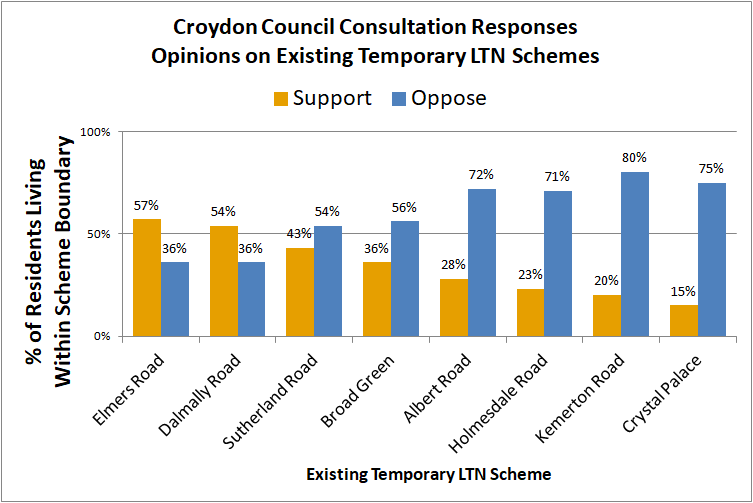
The above images are bar graphs of the Croydon Council Consultation Results for Elmers End, Dalmally Road, Sutherland Road, Broad Green, Albert Road, Homlesdale Road, Kemerton Road and Crystal Palace.
The above graphs show that the majority residents oppose LTN's in the Croydon Borough.
Due to the strength of feeling about the negative impacts of LTNs and the proposed ANPR (Automatic Number Plate Recognition) replacements, we now have the support of over 2,500 people through their Facebook group.
Open Our Roads campaigners care about residents of all roads, all road users and the community as a whole. We stand for inclusive design, community cohesion and accountable governance.
What are we fighting for?
Open roads: Fair, safe and equal access for all road users to all of the local area's public highways. The first step is removing all road barriers, re-opening our roads and eliminating unnecessary congestion from our main roads.
Clean air: Sustained and continuous improvement to the local air quality, especially on main roads where levels have been measured to be above the legal limits allowed.
Thriving town centres: The best possible conditions for our local businesses and traders to flourish during and after the pandemic while maintaining the unique character of our neighbourhoods.
Meaningful engagement: Proper consultation with all residents, businesses, road users, stakeholders and any person or organisation who will be impacted by significant changes to our local road network.
Evidenced-based policy: Data and evidence that leads to the most effective solutions and best practice policy addressing the community's most pressing challenges.
Inclusive design: Ensuring our most vulnerable neighbours have access to the services and activities necessary for active participation in our community.